
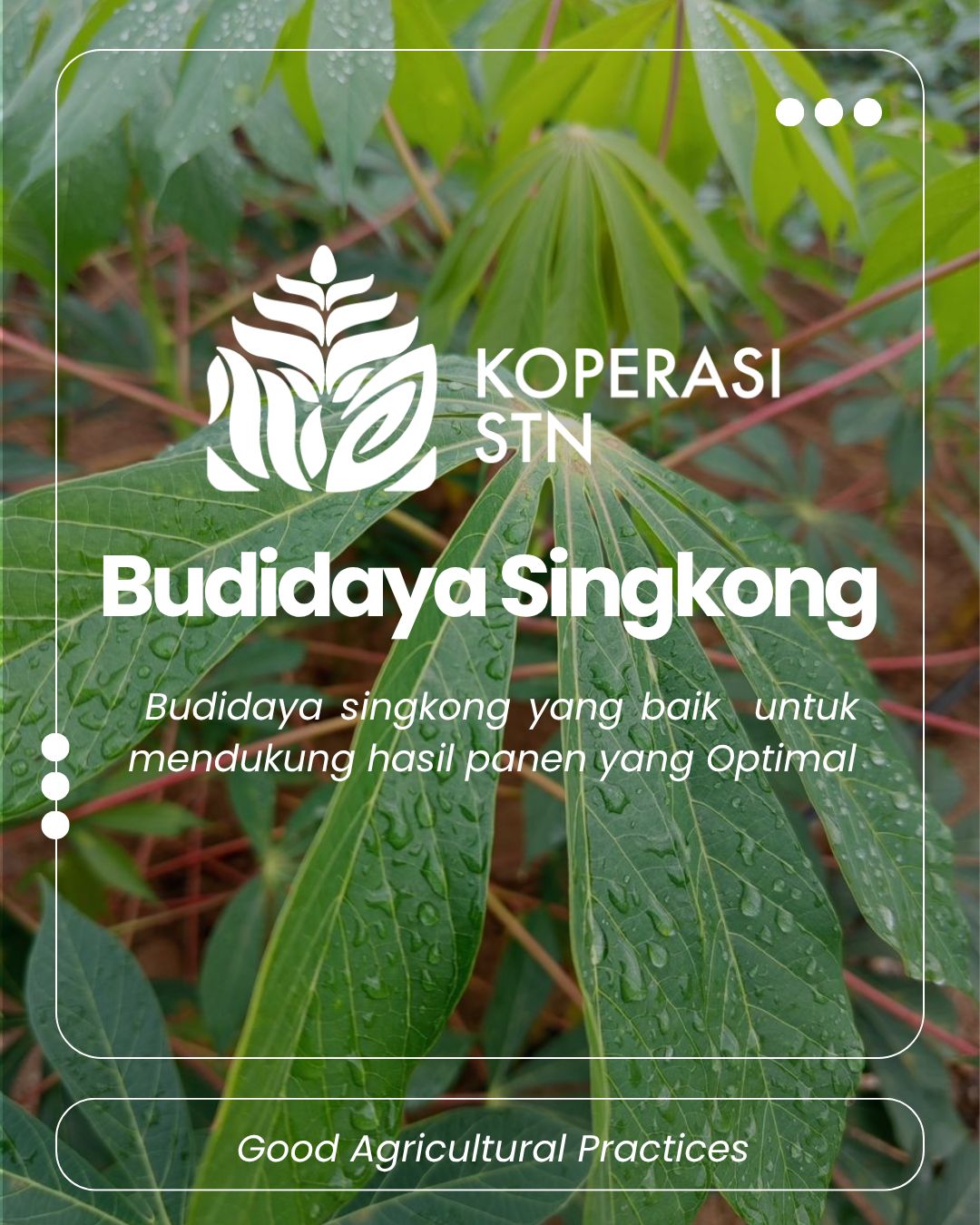
Complete Guide to Sustainable Cassava Cultivation
Cassava is not just a food source — it is also a sustainable economic opportunity for farmers. This guide covers six key stages of cassava cultivation: from land preparation to harvest and sustainability practices.
Cassava (Manihot esculenta) is one of the most resilient and economically valuable commodities in Indonesia. However, optimal yields can only be achieved with the right and consistent cultivation practices.
Here is a six-stage guide to sustainable cassava cultivation from the KPMP Sahabat Tani Nusantara agronomy team:
Stage 1: Land Preparation
Good land preparation is the foundation of a successful harvest.
- Ensure good field drainage: cassava does not tolerate waterlogging
- Till the soil to a depth of 30–40 cm to loosen the root zone
- Check and adjust soil pH to the range of 5.5–7.0
- Add dolomite lime if the soil is too acidic (pH < 5.5)
Stage 2: Seed Selection and Preparation
Seed quality determines 40% of harvest success.
- Use stems from plants aged 8–12 months
- Cut to a length of 20–25 cm with 5–7 bud nodes
- Choose healthy stems, free of disease and not too mature
- Soak seeds in a fungicide solution for 30 minutes before planting
Stage 3: Planting
- Plant at a depth of 5–10 cm, at a 45° angle or upright
- Optimal spacing: 90 × 80 cm to maximize plant population per hectare
- Best planting time: start of the rainy season (October–November)
Stage 4: Crop Maintenance
- Weeding: carry out 2–3 times during the first 3 months
- Fertilization: apply organic compost at months 1 and 3
- Irrigation: ensure adequate water supply, especially in the first 3 months of growth
- Pest monitoring: regular checks for early detection of mites and mealybugs
Stage 5: Harvest
- Cassava is ready to harvest at 8–12 months depending on the variety
- Signs of harvest readiness: lower leaves yellowing and beginning to fall
- Harvest in the morning to preserve tuber freshness
- Deliver to the factory within 24 hours of harvest to maintain quality
Stage 6: Sustainability Practices
- Use spent stems from harvest as seeds for the next season
- Return tuber peels to the field as a source of organic matter
- Rotate crops periodically to maintain soil health
"Cassava is not just a food source — it is also a sustainable economic opportunity for farmers." - KPMP Sahabat Tani Nusantara Team
#SahabatTaniNusantara #CassavaCultivation #SustainableFarming #FarmerCooperative #ModernAgriculture